



Starts - Delhi
Ends - Delhi
Duration – 17 Days/ 16 Nights
Places Covered - Delhi, Vrindavan, Agra, Fatehpursikri, Ranthambore Tiger Reserve, Jaipur, Pushkar, Kumbhalgarh, Udaipur, Jodhpur, Jaisalmer, Bikaner, Mandawa/ Jhunjhunu, Delhi.

Starts - Delhi
Ends - Delhi
Duration – 16 Days/ 15 Nights
Places Covered - Delhi, Vrindavan, Agra, Fatehpursikri, Ranthambore, Jaipur, Pushkar, Kumbalgarh, Udaipur, Ranakpur, Jodhpur, Jaisalmer, Bikaner, Mandawa/ Jhunjhunu, Delhi.
Starts - Delhi
Ends - Delhi
Duration – 15 Days/ 14 Nights
Places Covered - Delhi, Vrindavan, Agra, Fatehpursikri, Jaipur, Pushkar, Kumbalgarh, Udaipur, Ranakpur, Jodhpur, Jaisalmer, Bikaner, Mandawa/ Jhunjhunu.

Rajasthan in itelf is an amalgamation of different cultures, heritage, languages, food, clothing etc. Every 50-100 Kilometers you travel the life, language, people, dressing, food changes.This is the state of Forts and Palaces where the old Kings and Royals used to live. Rajasthan which is also known as the “Land of Maharajas” is the largest state of India, covering an area of about 342,239 sq. km. It comprises of 33 districts and its largest city is Jaipur, which is also its capital. The glory of the state is retained by its majestic palaces, forts and monuments. The vibrant culture and rich heritage of this princely state draw innumerable tourists from across the globe.

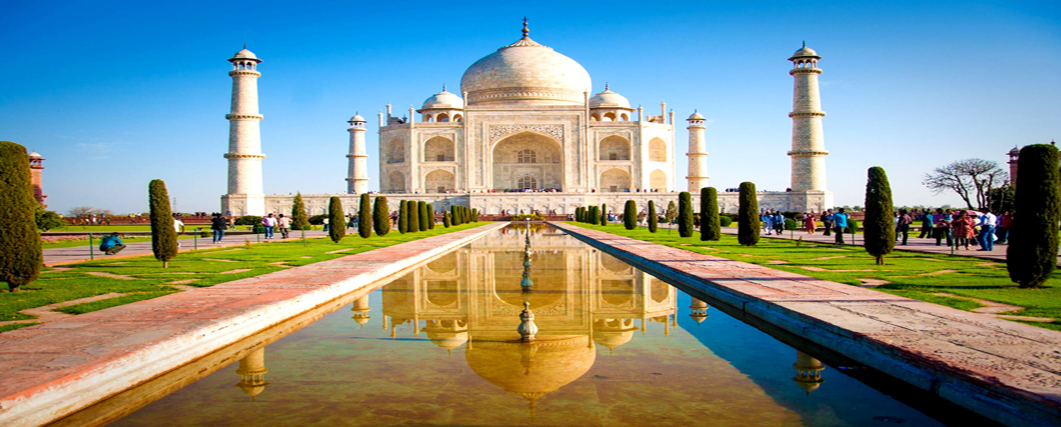
Agra is famous as being home to one of the Seven Wonders of the World - Taj Mahal. The architectural splendor of the Muslims, the fort and the palaces are vivid reminders of the opulence of the legendary Mughal Empire, of which Agra was the capital in the 16th and early 17th centuries. Though its significance as a political center ended with the transfer of the capital to Delhi in 1634 by the emperor at that time - Shah Jahan, its architectural wealth has secured its place on the international map. A pleasant town with a comparatively slow pace, Agra is known for its superb inlay work on marble and soapstone by craftsmen who are descendants of those who worked under the Mughals. The city is also famous for its carpets, gold thread embroidery and leather shoes.
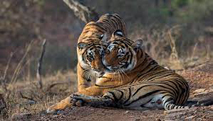
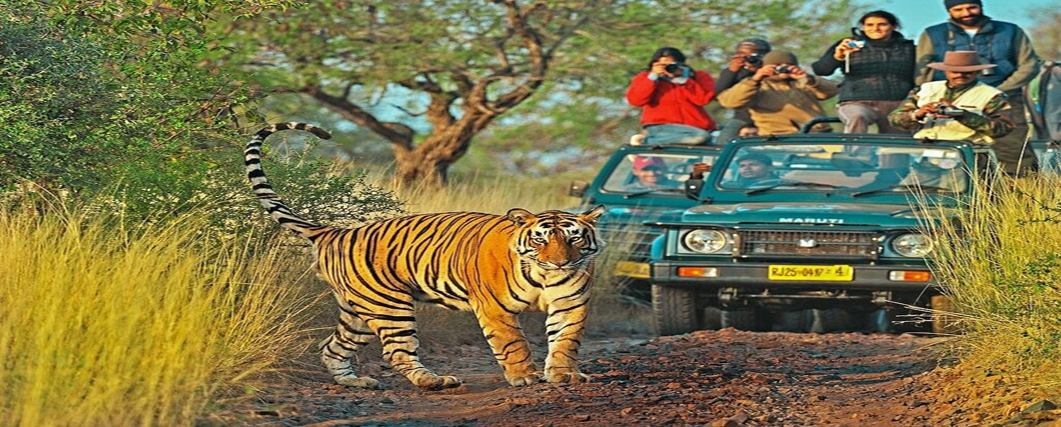
Ranthambore National Park is positioned at the convergence of the Vindhyan plateau and Aravali hill, in the Eastern region of Rajasthan. Two rivers, namely Banas in the North and Chambal in the South, flow through this National Park. You can also find six artificial lakes and quite a few perennial streams passing through the Ranthambore National Park. In the year of 1955, this Park got declared as a game sanctuary. However, its status of a national park came in the year of 1980. The year 1972 marks the commencement of Project Tiger. It was at this point of time when this park was conferred the status of a tiger reserve in the country. Ranthambore National Park is spread on an area of 1,334 sq kms together with its neighboring sanctuaries - the Mansingh Sanctuary and the Kaila Devi Sanctuary. In this park, there are some areas earmarked for the tourists where they can wander at their heart’s will and explore the fauna and flora housed here.
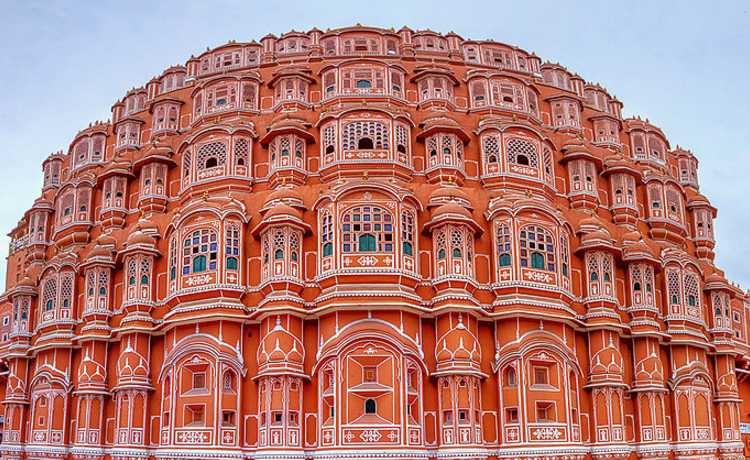
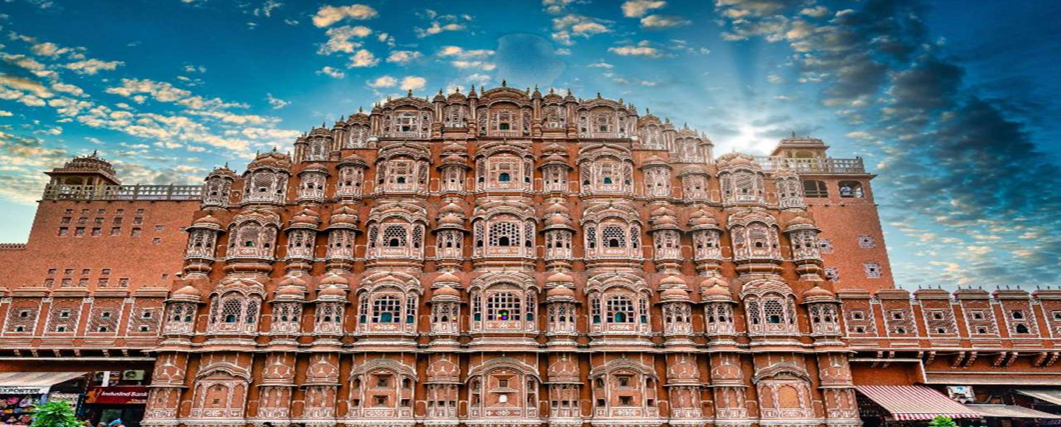
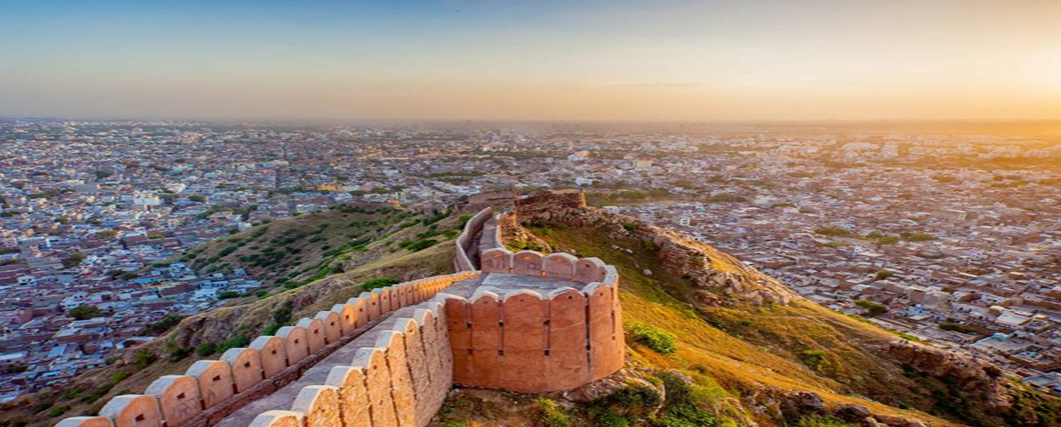
The capital of Rajasthan is popularly known as the Pink City. It was founded in 1727 AD by one of the greatest rulers of the Kachhawaha clan, the astronomer king Sawai Jai Singh. The pink color was used at the time of making to create an impression of red sandstone buildings of Mughal cities - and repainted in 1876, during the visit of the Prince of Wales. With broad avenues and spacious gardens, this capital of Rajasthan – Jaipu, is steeped in history and culture. Here the past comes alive in magnificent forts and palaces, blushed pink, where once lived the Maharajas (The Kings). The bustling markets of Jaipur, famous for Rajasthani jewellery, fabric and shoes, possess a timeless quality and are surely a treasure-trove for the shoppers. This fascinating city with its romantic charm takes you to an epoch of royalty and tradition.
Pushkar is a sacred town for the Hindus, situated 11 kms. to the North-West of Ajmer. Pushkar boasts temples, though few are as ancient as you might expect at such an important pilgrimage site. Since many of them were destroyed by Aurangzeb (A Mogul king), but subsequently rebuilt. The most famous is the Brahma Temple, said to be the only temple in the world dedicated to this deity. It stands on a high plinth with the Marble steps leading up to it. A silver turtle is set on the floor facing the Sanctum-Sanctorum. Around the turtle the Marble floor is inset with hundreds of silver coins. Coins engraved with donors names are also embedded in the walls. Peacocks adorn the temple walls as they are supposed to be the vehicle of lord Brahma's consort Saraswati. A small image of the milkmaid Gayatri, flanks the four-faced image of lord Brahma and is called Chaumurti The sanctuary has silver doors inside a carved marble gateway.
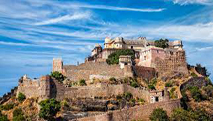
Located to the south of Jaipur and about 105Km from Udaipur is Kumbhalgarh. The city is cradled in the cluster of thirteen mountain peaks of the Aravalli ranges and the formidable medieval citadel-Kumbhalgarh stands a wary sentinel to the past glory. Kumbhalgarh is famous for the Kumbhalgarh Fort which was built and designed by Maharana Kumbha in the 15th century AD and is the second principal fort of Rajasthan after Chittorgarh.
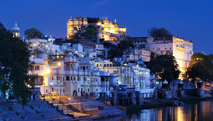
Udaipur is the jewel of Mewar - a kingdom ruled by the Sisodia dynasty for 1200 years. The foundation of the city has an interesting legend associated with it. According to it, Maharana Udai Singh, the founder, was hunting one day when he met a holy man meditating on a hill overlooking the Lake Pichhola. Overlooking the aquamarine expanses of the Lake Pichhola stands the splendid City Palace - a marvel in granite and marble. This city of Dawn, Udaipur is a lovely land around the azure water lakes, hemmed in by the lush hills of the Aravalis drenched in romance and beauty. Udaipur is a fascinating blend of sights, sounds and experiences - an inspiration for the imagination of the poets, painters and writers. Its kaleidoscope of fairy-tale palaces, lakes, temples, gardens and narrow lanes strewn with stalls, carry the flavor of heroic past, epitomizing valor and chivalry.
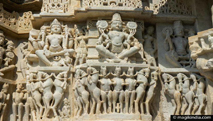
The location of Ranakpur, in the tranquil valley of the Aravalli range, 90 km from Udaipur, has also been responsible in attracting a whole lot of visitors to the city. The Ranakpur Jain Temples command huge respect from the Jain community worldwide. Built during the rule of Rana Kumbha, these temples have included Ranakpur in the list of five main pilgrim destinations of Jains in India. History has it that Rana Kumbha donated a vast stretch of land to Dhanna Shah so as to enable him to realize his dream of building a great temple. Today, these temples attract thousands of visitors every year from across the country and abroad.

Set at the edge of the Thar desert, the imperial city of Jodhpur echoes with tales of antiquity in the emptiness of the desert. Once the capital of the Marwar state, it was founded in 1459 A.D. by Rao Jodha-chief of the Rathore clan of Rajputs who claimed to be descendants of Rama - the epic hero of the Ramayana. The massive 15th century A.D. Mehrangarh Fort looms on the top of a rocky hill, soaring 125 Mts. Above the plains. The city is encompassed by a high wall -10 km long with 8 gates and innumerable bastions. A major trade centre of the 16th century A.D. the fortress-city of Jodhpur is now the second largest city of Rajasthan.

Situated amid picturesque Thar Desert, the Jaisalmer city commands premiere position among the tourist attractions scattered all over Rajasthan. The Jaisalmer city is revered both by Indian as well as foreign tourists. Who would have dreamt in such a vast sand oasis a castle worthy of an ancient throne, such an art in carven work of stone? It is like straight out of an Arabian Nights fable. The name Jaisalmer induces a dramatic picture of utter magic and brilliance of the desert. The hostile terrain notwithstanding the warmth and color of people is simply over whelming.
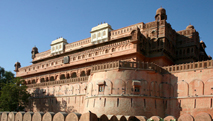
If ever beauty has bloomed in a desert, it has been at Bikaner. Founded in 1488 AD by Rao Bika Ji, it's located in North West part of Rajasthan state in INDIA. The imposing palaces, beautiful and richly sculptured temples of red and yellow sand stones display some of the finest creations of Rajput civilization. It's the lust for "dessert” or affection for "desert" that tickles every heart to visit Bikaner.
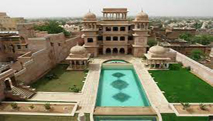
Stories of valor abound in the region. Innumerable monuments are connected with lives and tales of warriors of Jhunjhunu. The Havelis (Traditional Royal Houses) of the rich and famous attract the tourists with the fresco paintings in different colors and shades. The culture and history of Jhunjhunu is very well depicted in these paintings. However, these Havelis now either lie vacant or have been converted to hotels.


